EIGHT PORTRAITS OF SOMETHING INVISIBLE
Move a hidden mass. Watch a galaxy become a ring.Reconstruct the reference print, one small bend at a time.
Opening the darkroom…
Match both the shape and the position of the luminous arcs.
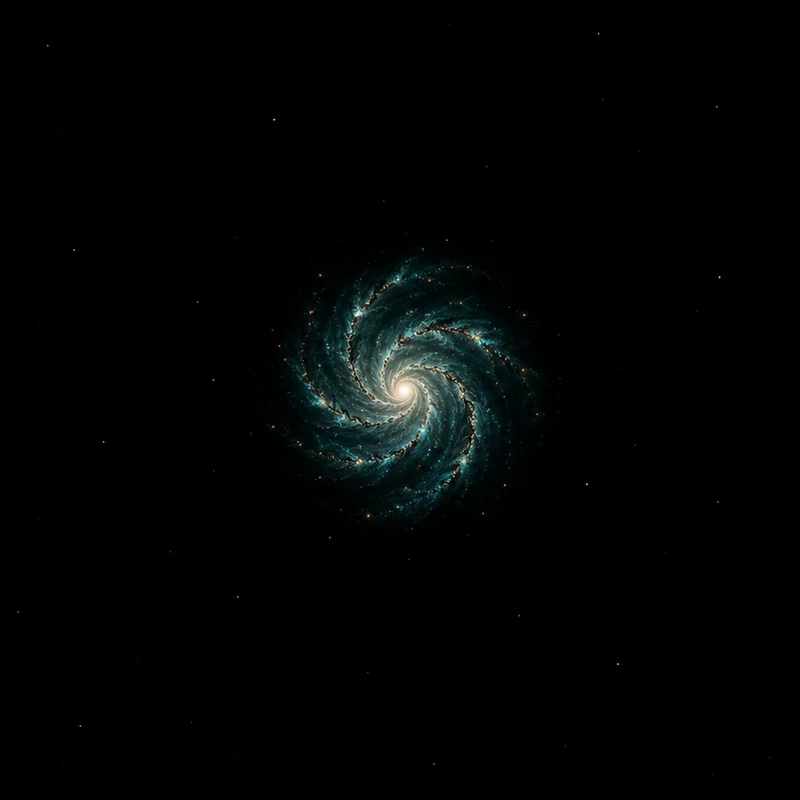
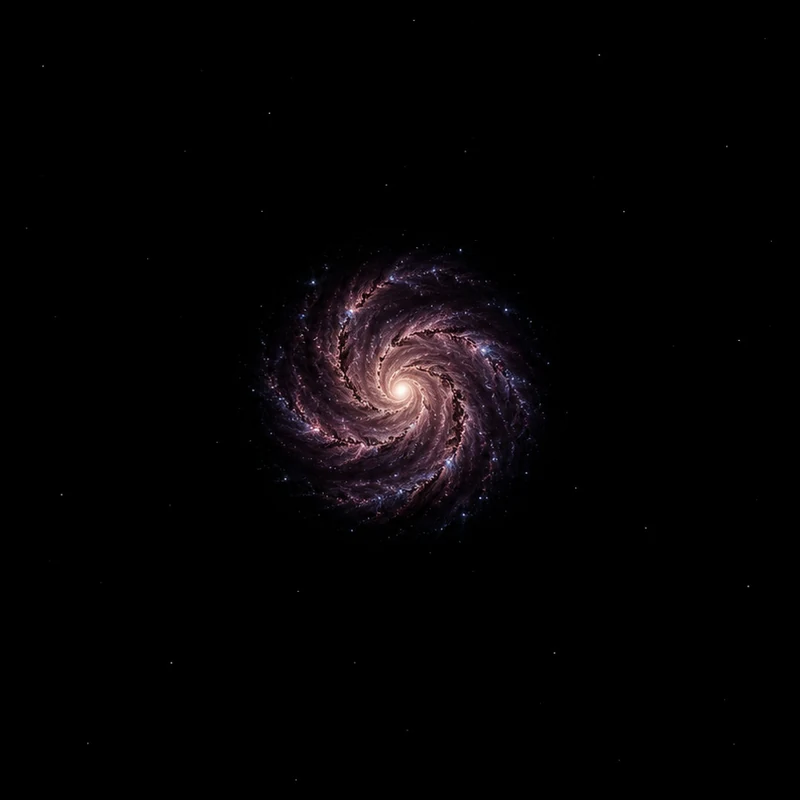
The light begins in a painted source image.
Point-mass equations bend each viewing direction.
The same galaxy appears stretched, split, or ringed.
NOTES FROM THE DARKROOM
A foreground mass bends light from a more distant galaxy. In this idealized game, each viewing pixel is traced backward through one or two point-mass lenses into a painted source image. This creates the luminous rings and arcs you see.
Your task: match the reference print. Select the amber or violet mass, move it on the five-by-five position grid (or drag it on the sky), then change its reach from 1 to 5. Larger reach bends light more strongly. Press Develop this print to certify a match. The alignment meter compares the lens maps at sixteen test directions; a complete match lights it to 100%.
There is no time limit or move penalty. Undo and reset are unlimited. A nudge adjusts one setting toward a solution. The position guide reveals where the invisible weights belong, while leaving their reach to you. Swapping two identical-role lenses is accepted. Finished portraits are saved on this device when storage is available.
Keyboard: focus the sky, then arrows move the selected lens; +/− change reach; 1/2 select a lens; Enter develops; H nudges; U undoes; R resets; G toggles the guide. The grid and buttons also work with touch.
Original browser game and interface: MIT. The point-mass deflection kernel is adapted from lenstronomy by its developers (227 stars observed; BSD-3-Clause). Bundled upstream license. No upstream Python runtime or data is needed.
Inspired by Euclid Space Warps and October 2026 Euclid strong-lensing research. The two source galaxies were created with a GPT image model, then bundled locally. This is an educational toy, not a scientific reconstruction tool.